
To back up a Snagit 2022 or later Library, copy its complete folder after saving your work and closing Snagit. Find the active path in Library settings first. Keep an untouched backup, then test a separate restore copy before deleting anything. Older Windows Datastore archives need a different procedure.
Choose the correct Library generation first
Check the version on both computers. Snagit 2022 introduced SNAGX in place of Windows SNAG and Mac SNAGPROJ. A legacy Windows archive can still be imported into a newer installation when its import requirements are met; it is not the normal backup format for a new SNAGX Library.
| Source Library | What to preserve | Important distinction |
|---|---|---|
| Windows or Mac, 2022+ | Complete configured Library folder | SNAGX sources; check the destination before a move or merge |
| Windows, 2021 or earlier | Datastore and a supported .snagarchive backup | Legacy restore replaces captures; it does not merge Datastores |
| Mac, 2021 or earlier | Configured Autosaved Captures folder | Do not apply Windows Datastore instructions; old tags and app icons do not transfer |
Find the active Snagit Library location
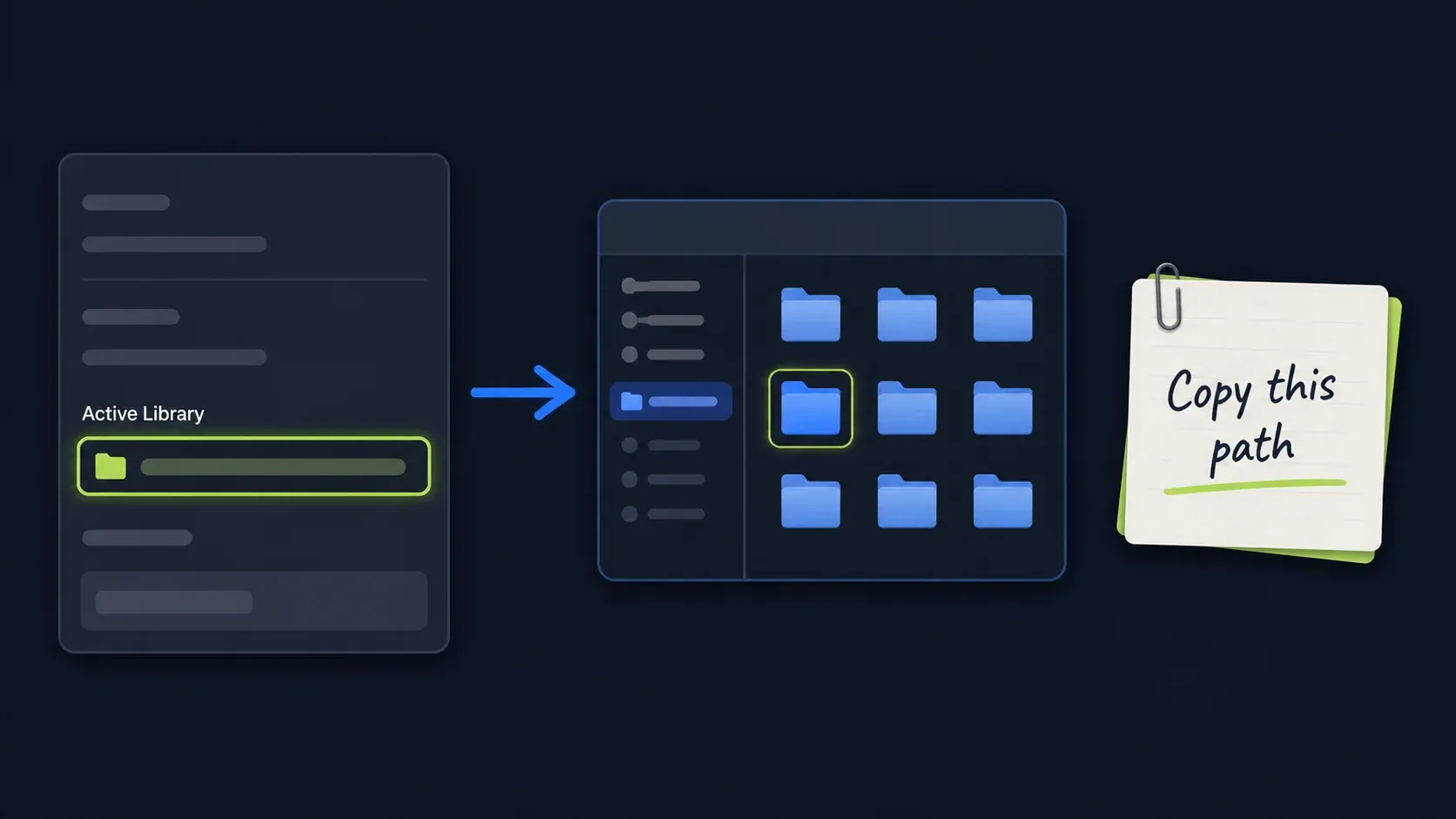
The configured path identifies the folder Snagit is currently reading. If the Library looks empty, that path may be the wrong one; check where the actual files remain before moving anything.
Windows
- Open Snagit Editor and select Edit > Editor Preferences > Library.
- Read or hover over the Library location to see its full path.
- Record that path before choosing a different folder.
The 2026 Windows deployment guide, pages 32–33, lists %USERPROFILE%\Documents\Snagit\ as the default. Custom folders, cloud storage, and administrator settings can change it. IT can also prevent users from changing this setting.
Mac
- Open Snagit > Settings from the Mac menu bar, or Preferences where that label is used.
- Look under Library for the stored-files location.
- Record the full path. Older instructions place this control under Advanced; use that only if it matches your installed version.
TechSmith’s June 2026 offloading instructions use the Library tab. Its older Mac migration guide uses Advanced and lists ~/Pictures/Snagit for 2022+, with Autosaved Captures under Pictures or Documents for earlier versions. These are defaults, not proof of your active path. The illustration below is a path-recording aid, not an exact menu reference for every release.
Know what the Library backup covers
The Library is a view of files in its configured location. Copying it does not back up every export, online recording, or application setting.
| Content | Backup action |
|---|---|
| SNAGX, MP4, and GIF files actually in Library | Include the complete Library folder and verify representative files |
| Sources or exports in other project folders | Back up those folders separately |
| Screencast or other online media | Use that service’s export process for the material you need |
| Quick Styles and other preferences | Plan a separate settings migration; a Library copy is not a full Snagit configuration backup |
The 2026 Windows deployment guide places settings such as Quick Styles in a separate user-data location, normally %LOCALAPPDATA%\TechSmith\Snagit. Do not blindly copy every application-data folder between computers. Ask IT which settings should move. For editable image sources versus flattened exports, see the SNAGX format guide.
Back up Snagit 2022 or later
If saving already fails, protect the open capture with the Failed to Save Document procedure before quitting. Use this backup sequence once the work you need is safely saved:
- Record the active Library path and Snagit version. Check that cloud files you need are fully downloaded.
- Save current edits and verify important source files before closing their windows.
- Quit both Snagit Capture and Snagit Editor before copying.
- Copy the entire Library to separate dated storage without replacing an older backup.
- Record the source path, date, destination, folder size, item count, and any copy errors.
- Make a separate working copy for restore checks. Open representative files from that copy.
- Keep the original and untouched backup until the restore checks pass and retention permits deletion.
A name such as Snagit-Library-Workstation-2026-09-12 identifies the device and date. Keep your record beside the folder. Do not rearrange its contents while making the backup.
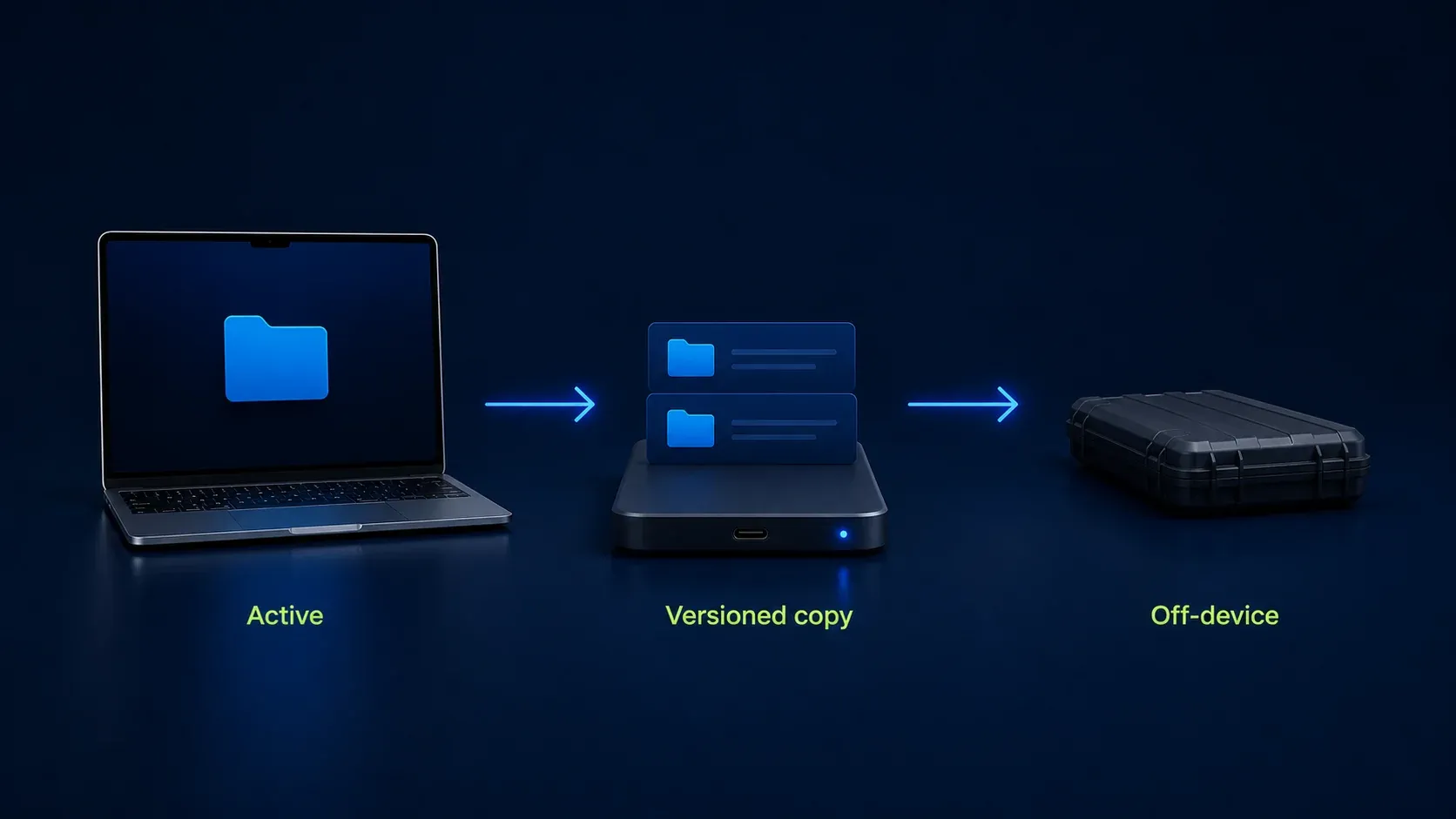
For irreplaceable work, our recommendation is a versioned backup plus a copy separated from the computer. Live sync alone is not a record of a known-good state. Confirm that your backup tool includes this folder, retains the versions you need, and can restore them.
Protect the backup as carefully as the active Library
Capture backups may contain private records and editable content hidden beneath annotations. Use approved storage, restrict access, and agree on retention for the backup itself. Deleting a working file and retaining an older backup are separate decisions.
Keep employer data out of personal accounts unless policy allows it. Record who can restore the backup and how access will be recovered if the computer is lost.
A redacted export does not automatically sanitize the editable source. Review which sources your policy permits you to retain; do not treat a rectangle over sensitive text as proof that every stored copy is safe to share.
Verify the backup before you need it
Test a working copy, leaving the backup untouched. Choose recent and older images, plus a video and tagged capture if you use them. Record how each behaves in the original Library so you have something concrete to compare.
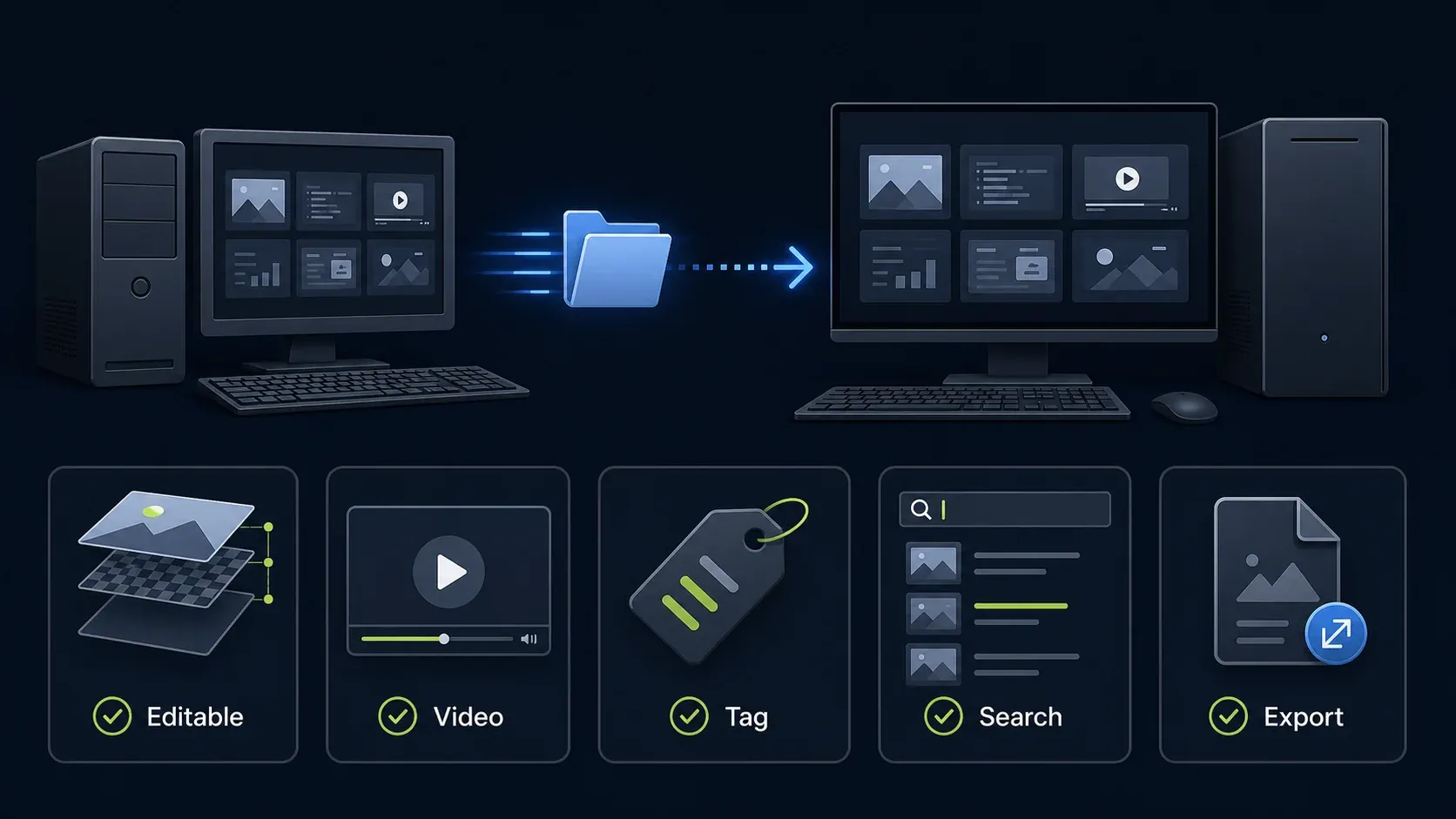
| Check | What to verify |
|---|---|
| Editable source | Open it in a compatible Snagit version; check the expected text and annotation objects |
| Video, when present | Play, seek, and check the end of a copied file |
| Library history | Look for both recent and older captures, not just the first thumbnails |
| Metadata and search | Compare expected tags, dates, and searches with the original, accounting for version and storage limits |
| Outside exports | Open the required project files that were backed up separately |
A missing search result can reflect indexing or a network-storage limitation, not necessarily a damaged file. Compare the actual file and Library settings before diagnosing the copy. Record failures and keep the source; a few successful samples cannot guarantee that every file is intact.
Move the Library to a new Windows computer
TechSmith’s Windows migration instructions use whole-folder copying for 2022+. Install a compatible, licensed version on the destination and back up any Library already there.
- Copy the old Library to a separate folder on the new computer’s internal drive.
- Open Edit > Editor Preferences > Library > Choose location.
- Use Browse other to select the copied Snagit folder and confirm the destination.
- Read any move, merge, or replace prompt before accepting it. Cancel if either affected Library lacks a backup.
- Run the restore checks above before retiring the old computer.
Documents is the vendor’s suggested destination, but OneDrive can back up Documents and Desktop. Check the full path and sync settings if you need a local-only destination.
Move the Library to a new Mac
The Mac migration guide says to close Snagit and transfer the capture-folder contents to the new Mac. Back up both computers’ Libraries first. If the destination already has useful captures or filename conflicts appear, stop before accepting replacements and use the merge guidance below.
Check the configured path on each Mac rather than assuming the default. Reopen Snagit after the copy and run the restore checks. The vendor says native SNAGX metadata transfers with 2022+ captures; tags and application icons from Mac 2021 or earlier do not transfer under its documented procedure.
Fix an empty or erratic Library safely
TechSmith’s missing-Library procedure checks the selected folder, offline availability, and sync restrictions. A Windows Search indexing notification needs its own investigation. Do not interpret an empty grid as permission to delete the folder.
For cloud storage, verify that the required files are downloaded, the client is syncing, and there is space for a complete copy. Metered connections and throttling can delay sync. Do not change every cloud setting or download an entire account merely to check one Library.
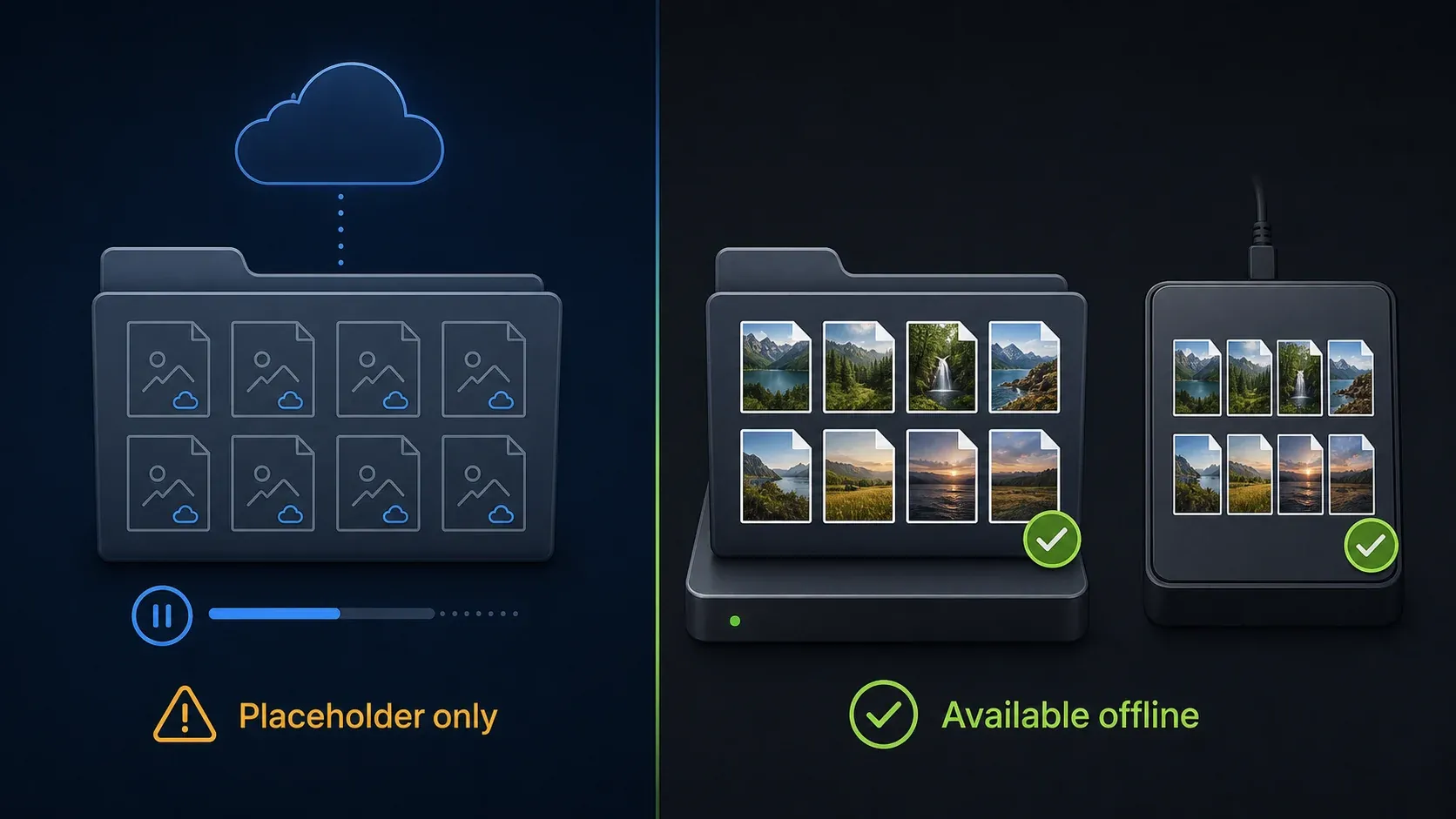
TechSmith’s November 2025 erratic-Library article associates OneDrive with wrong dates, broken thumbnails, unreadable SNAGX files, tag problems, and broken Explorer previews. It recommends a temporary move off OneDrive. Preserve the current state first and test a separate local location; this is not proof that OneDrive causes every Library error.
On Windows network drives, the 2026 deployment guide lists missing file counts, filename-only search, unavailable filter categories, and disabled tagging. It recommends local unmapped storage for full functionality. Supported cloud locations require a locally installed, actively syncing client; check the provider-specific requirements for your version.
Restore a legacy Windows Datastore
The old Windows default was C:\Users\username\AppData\Local\TechSmith\Snagit\DataStore. TechSmith’s Datastore restore instructions apply to data from 2021 or earlier, including importing that data into a newer release. Restoring replaces the current captures; it does not merge two Datastores. Preserve both states first.
A legacy automatically-stored-files backup can omit files saved elsewhere and the original created date. Keep separate project files and record any metadata you need before retiring the old installation. Do not rename a current SNAGX Library as a legacy archive.
If a newer Windows installation cannot import an old backup, TechSmith’s July 2026 import article identifies disabled Microsoft SQL CE as one possible cause. Changing that installer option may require reinstalling. The deployment guide flags SQL CE as unsupported and describes an administrator conversion tool for temporary use. Ask IT or TechSmith for the appropriate legacy conversion route; do not reinstall or weaken deployment policy as a routine current-Library fix.
Merge Libraries without confusing them with Datastores
Modern Library merging is a documented workflow. The Snagit 2022 help manual, pages 207–210, describes changing the current Library location to the Snagit folder containing the other Library. Snagit performs the merge through its location control; this is different from manually combining folders or restoring a legacy Datastore.
That manual shows historical menus, especially on Mac. Back up both Libraries, use the location control available in your installed version, and read the destination prompt. If the control or proposed action differs, keep both copies and consult TechSmith before proceeding. Do not assume that duplicate filenames, damaged files, or mixed generations will resolve automatically.
Export standard files before subscription access changes
Subscription expiry does not itself delete locally stored captures. That does not protect them from disk failure, cloud deletion, or an organization’s retention policy. App access and file preservation are separate issues.
While your subscription or trial is active, TechSmith recommends batch-exporting needed images to standard formats. Copy MP4 and GIF files that are already in the Library; account separately for projects or media stored elsewhere. Export needed Screencast media through that service. If access has expired, ask support about available options rather than assuming a fixed grace period.
Retain permitted editable sources as well as useful exports. Open exported samples and inspect text, redaction, transparency, and playback before uninstalling or deleting data. See the pricing and licensing guide for access terms, not backup guarantees.
For day-to-day use, choose a backup frequency based on how much work you could afford to recreate. Once your files are protected, the Snagit guides index can help you continue with capture, editing, or export tasks.
Snagit Library location and backup FAQ
Where is the Snagit Library on Windows?
In Editor, open Edit > Editor Preferences > Library and read the configured path. The 2026 Windows default is %USERPROFILE%\Documents\Snagit\, but a custom, cloud, or managed location may differ.
Where is the Snagit Library on Mac?
Check Snagit > Settings or Preferences > Library. Older versions may place the control under Advanced. TechSmith lists ~/Pictures/Snagit as the default for 2022+, but use the path actually configured in your app.
How do I back up Snagit 2022 or later?
Save your work, ensure required cloud files are downloaded, close Capture and Editor, and copy the entire Library to separate dated storage. Test a working copy without altering the backup. Legacy .snagarchive import is a separate procedure.
Can I keep my active Snagit Library in OneDrive?
Snagit supports cloud Library locations, but TechSmith documents specific OneDrive-related faults. Verify local file availability and sync, retain an independent backup, and use a backed-up local test when investigating those symptoms.
Can I merge two Snagit Library folders manually?
Use Snagit’s documented location-based merge workflow for compatible modern Libraries, after backing up both. Do not combine folders blindly. Legacy Windows Datastore restore replaces captures and cannot merge Datastores.
What does a Snagit Library backup miss?
It misses sources and exports saved elsewhere, media kept only in online services, and settings stored outside Library, such as Windows Quick Styles. Include those separately in your backup and migration plan.
What happens to my captures when a Snagit subscription ends?
Expiry does not itself delete the local captures, but editing access can change. Export needed images while your subscription or trial is active, retain permitted sources, and back up the files independently.
Correction, September 12, 2026: separated old Windows and Mac storage, corrected current Mac settings, clarified modern merging versus legacy replacement, and removed an unsupported 20-minute restore estimate from structured data.